Author(s): Mohan Babu P
Paper Details: Volume 3, Issue 5
Citation: IJLSSS 3(5) 42
Page No: 431 – 444
ABSTRACT
The emergence of BRICS 2.0 marks a transformative shift in global governance, economic order, and sustainable development. This paper undertakes a comparative, doctrinal, and historical analysis of BRICS nations Brazil, Russia, India, China, and South Africa to explore how they are redefining the parameters of international cooperation and financial sovereignty in the 21st century. Historically, the dominance of Western-led institutions such as the IMF and World Bank constrained the economic autonomy of the Global South. Through doctrinal developments like the BRICS Charter, the New Development Bank (NDB), and policies promoting de-dollarization, BRICS countries have carved out an alternative model of governance based on equality, inclusivity, and mutual growth. The comparative study highlights how each member nation integrates sustainability and digitalization within its governance frameworks India’s Digital Public Infrastructure, China’s Green Belt initiatives, and Brazil’s bio-economy leadership collectively contributing to a new ecosystem of cooperation. The doctrinal method evaluates BRICS’ evolving legal and policy instruments that strengthen climate commitments, promote data sovereignty, and enhance digital ethics. The historical approach traces the evolution from BRICS’ political alliance to a multidimensional platform driving sustainable and digital transformation. Looking forward, the study envisions BRICS 2.0 as a catalyst for equitable digital governance, green technology innovation, and inclusive financial systems in the Global South. Leveraging AI, blockchain, and data-driven diplomacy, BRICS nations can pioneer a model where sustainability, technology, and sovereignty coexist, thereby reshaping global governance for a balanced and resilient future.
Keywords: BRICS 2.0, Global Governance, Sustainable Development, Digital Transformation, Financial Sovereignty.
INTRODUCTION
The 21st century has witnessed an unprecedented transformation in the global economic and political landscape, marked by the emergence of new power blocs that challenge traditional Western dominance. Among them, the **BRICS alliance Brazil, Russia, India, China, and South Africa**stands as a dynamic and evolving coalition redefining global governance and development paradigms. The concept of “BRICS 2.0” represents the alliance’s transition from a primarily economic grouping to a comprehensive platform that integrates sustainability, digital innovation, and financial independence into its core agenda. This evolution signifies not merely a geopolitical shift, but a structural reconfiguration of the world order, emphasizing equality, inclusivity, and multipolar collaboration in addressing shared global challenges. Historically, the global economy has been governed by institutions such as the International Monetary Fund (IMF) and the World Bank, which have long been criticized for their Western-centric frameworks and conditional assistance policies that often restricted the autonomy of developing nations. The rise of BRICS, and particularly the establishment of the New Development Bank (NDB), reflects a deliberate move toward reshaping the mechanisms of global finance, promoting de-dollarization, and reinforcing the concept of financial sovereignty in the Global South. Through this transformation, BRICS has sought to provide an equitable alternative to existing global structures by focusing on shared growth, technological self-reliance, and sustainable development. Moreover, BRICS nations have increasingly recognized the importance of digital transformation and green innovation as the twin pillars of future growth. Initiatives such as India’s Digital Public Infrastructure, China’s Green Belt and Road, Russia’s technological modernization, Brazil’s bio-economy focus, and South Africa’s renewable energy frameworks highlight the diverse yet interconnected strategies driving the BRICS 2.0 vision. These efforts aim to harmonize technological advancement with environmental responsibility, ensuring that progress remains inclusive and sustainable. In this context, the present study adopts comparative, doctrinal, and historical methodologies to analyze the evolving trajectory of BRICS as a transformative force in the global arena. It explores how the bloc’s integration of digital innovation, green policies, and financial independence can shape a more resilient, just, and technologically empowered future for the Global South thereby redefining the contours of global governance in the decades to come.
REVIEW OF LITERATURE
J. Huang’s Geoscience Frontiers (2024, Elsevier)[1] explores the interconnection between natural resources, innovation, globalization, and green growth in BRICS nations from 1990–2021, emphasizing the role of financial development. Using dynamic system panel data and robust GLS regression, the study finds that natural resources, R&D, and financial development promote green growth, while globalization shows a negative correlation. It recommends that policymakers strengthen environmental regulations, promote clean technologies, and integrate sustainability into trade policies. By prioritizing eco-friendly supply chains and sustainable trade, BRICS countries can balance globalization’s economic benefits with environmental responsibility and long-term green growth.
MZ Chishti, A Sinha – Technology in Society, 2022 – Elsevier[2] The paper develops a novel framework to analyze how technological and financial innovation shocks affect CO₂ emissions in BRICS economies. Using the Westerlund cointegration test and second-generation estimators (AMG and CCEMG), it confirms a long-run relationship among variables. Findings reveal that positive financial innovation shocks increase emissions, while negative ones reduce them. Technological innovation helps mitigate CO₂ levels, though adverse shocks show no effect. Urbanization reduces environmental degradation, whereas fossil fuel use raises emissions. Evidence supports the Environmental Kuznets Curve (EKC) hypothesis. The study employs FMOLS and causality tests, recommending SDG-oriented policies for sustainable BRICS development.
MC Udeagha, E Muchapondwa – Sustainable Development, 2023 – Wiley Online Library [3] The study examines how green finance (GFN) and financial technology (fintech) contribute to achieving carbon neutrality in BRICS nations from 1990 to 2020, considering factors such as energy innovation (ENI), economic growth (GDP), and natural resource rent (NRR). Despite the region’s heavy reliance on fossil fuels, which continues to drive greenhouse gas emissions, BRICS countries possess vast renewable energy potential. Findings aligned with the Environmental Kuznets Curve (EKC) theory show that GFN, fintech, and ENI enhance environmental sustainability, whereas GDP growth and NRR degrade environmental quality. The study reveals bidirectional causality between CO₂ emissions and GFN, fintech, and NRR, and unidirectional causality from GDP and ENI to emissions. Policy recommendations urge BRICS nations to expand green credit facilities, promote green financial products, and strengthen institutional capacity to manage environmental risks while fostering innovation-driven sustainable growth.
U Ullah, WA Shaheen – Environment, Development and Sustainability, 2024 – Springer [4]This study investigates the growing threat of climate change manifested through global warming, extreme weather, and environmental instability and its relationship with governance, sustainable finance, and technological innovation. Using a quantitative approach with secondary data from 111 countries (2003–2019) sourced from WDI, OECD.stat, and World Governance Indicators, the research employs FMOLS estimation and the entropy-weighted method to construct a governance index, marking a first in sustainable environmental analysis. Results indicate that sustainable finance and technological innovation significantly reduce greenhouse gas (GHG) emissions, while trade openness, infrastructure, economic growth, and foreign direct investment (FDI) increase emissions. Importantly, the inclusion of governance as a mediating factor strengthens the relationship, underscoring its pivotal role in enhancing policy effectiveness and ensuring that financial and technological progress aligns with environmental sustainability goals.
A Prabhakar – Journal of Recycling Economy & Sustainability …, 2025 – respjournal.com[5] This paper examines the urgent need for sustainable and inclusive economic development in the context of global challenges such as the COVID-19 pandemic aftermath, geopolitical conflicts, climate-induced disasters, and demographic shifts, all of which hinder progress toward the Sustainable Development Goals (SDGs) by 2030. Using a comprehensive review of literature, including the Sustainable Development Report 2023, the study finds that only 15% of SDGs are on track, with developing countries particularly constrained by financial deficits. The analysis highlights multilateral cooperation, innovative financing, technology transfer, capacity building, and prioritization of vulnerable populations as critical strategies. Recommendations emphasize strengthening global partnerships, leveraging private sector investments through blended finance, enhancing local capacities, promoting inclusive growth, and supporting South-South Cooperation to accelerate sustainable development and achieve equitable global progress.
RESEARCH GAP
Existing literature on BRICS nations provides valuable insights into the intersections of green growth, financial innovation, technology, and sustainable development, yet notable gaps remain. Studies like J. Huang (2024) examine how natural resources, R&D, and financial development promote green growth, while globalization negatively impacts environmental outcomes. However, this research primarily focuses on economic and resource-based determinants, leaving limited exploration of digital infrastructure, governance, and policy coordination as drivers of sustainability within BRICS. Similarly, Chishti and Sinha (2022) analyze the effects of technological and financial innovation shocks on CO₂ emissions, confirming the EKC hypothesis, but their study emphasizes statistical relationships rather than a comparative or doctrinal evaluation of policy frameworks across BRICS nations. Udeagha and Muchapondwa (2023) highlight green finance and fintech as critical for carbon neutrality, yet they lack a historical and institutional perspective on how BRICS collectively leverage these tools to enhance global governance and economic independence. Furthermore, Ullah and Shaheen (2024) underscore governance as a mediating factor in sustainable outcomes, but their global-level analysis does not specifically address the unique political, economic, and digital strategies of BRICS members. Prabhakar (2025) emphasizes SDG challenges and multilateral cooperation, yet the study does not explore how BRICS 2.0 can integrate financial sovereignty, green innovation, and digital transformation into a cohesive framework for the Global South. In sum, while previous research addresses economic, environmental, and technological aspects, there is a gap in holistic, interdisciplinary analyses that combine historical, doctrinal, and comparative perspectives to assess BRICS 2.0 as a transformative platform. This study aims to fill this gap by examining how green innovation, digitalization, and financial independence collectively reshape sustainable development and global governance in the BRICS context.
OBJECTIVES OF THE STUDY
- To analyze the evolution of BRICS 2.0 from a primarily economic coalition to a multidimensional platform integrating sustainability, digital innovation, and financial independence.
- To examine the role of BRICS nations in reshaping global governance, with a focus on creating equitable, inclusive, and multipolar structures that enhance the autonomy of the Global South.
- To assess the contribution of green innovation and environmental policies in promoting sustainable development across BRICS countries, including renewable energy, bio-economy, and climate-focused initiatives.
- To explore the impact of digital transformation and technological inclusion on economic growth, data sovereignty, and governance frameworks within BRICS nations.
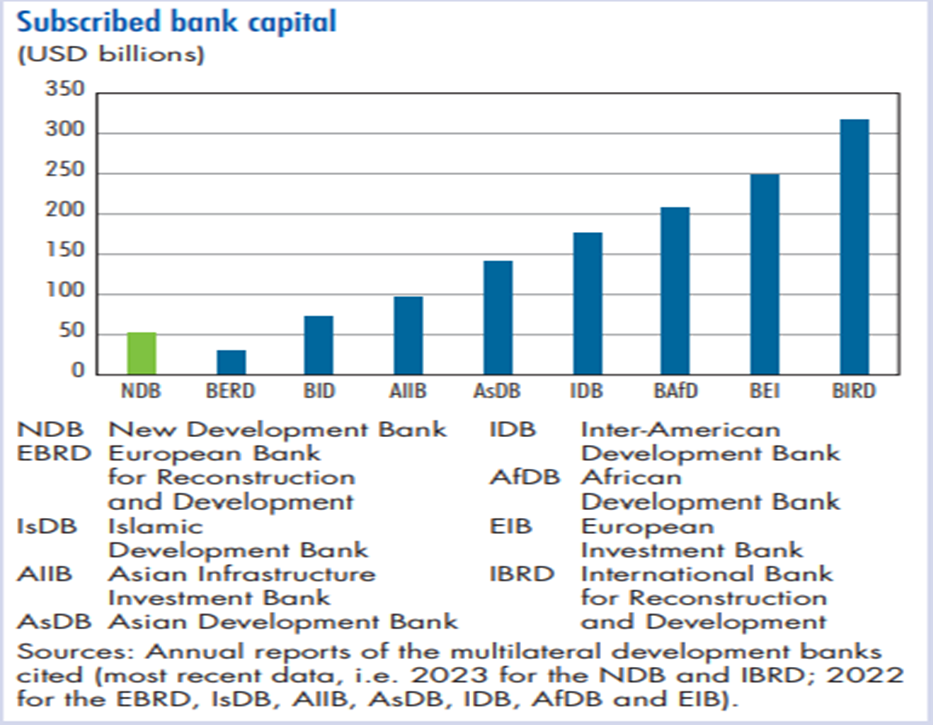
- To evaluate the role of financial independence and de-dollarization strategies in strengthening the Global South’s economic resilience and reducing reliance on Western-led financial institutions.
- To conduct a comparative, doctrinal, and historical analysis of BRICS’ policies, legal frameworks, and institutional mechanisms supporting sustainability, technology adoption, and inclusive growth.
- To identify the potential of BRICS 2.0 as a model for global development, emphasizing the integration of green finance, digital innovation, and multilateral cooperation in addressing shared challenges.
- To provide policy recommendations that enable BRICS nations to harmonize technological advancement, environmental responsibility, and financial sovereignty for a balanced and resilient global future.
RESEARCH METHODOLOGY
The present study adopts a qualitative and interdisciplinary research methodology to examine BRICS 2.0 as a transformative force in sustainable development, digital innovation, and financial independence for the Global South. The methodology integrates comparative, doctrinal, and historical approaches to ensure a holistic understanding of the bloc’s evolving role in global governance. The comparative method involves analyzing the policies, initiatives, and institutional frameworks of each BRICS member Brazil, Russia, India, China, and South Africa focusing on their strategies in green innovation, digital infrastructure, and financial autonomy. This approach enables the identification of best practices, divergences, and synergies across countries, highlighting how diverse national strategies collectively contribute to BRICS 2.0’s overarching vision. The doctrinal method examines legal instruments, treaties, charters, and policy documents such as the BRICS Charter, New Development Bank (NDB) regulations, and national digital ad green policies. This allows for a critical evaluation of how BRICS institutional mechanisms promote climate commitments, data sovereignty, technological ethics, and financial independence. The historical method traces the evolution of BRICS from a political and economic alliance to a multidimensional platform shaping sustainable and digital global governance. By contextualizing contemporary initiatives within historical developments, the study highlights the bloc’s strategic progression and long-term vision for the Global South. Secondary sources such as peer-reviewed journals, policy reports, government publications, and international databases form the primary data corpus. Data analysis employs thematic content analysis to synthesize insights across environmental, technological, and financial dimensions. By combining these methods, the study aims to provide a comprehensive, interdisciplinary perspective on BRICS 2.0, capturing the intersection of sustainability, technology, and financial sovereignty and its implications for reshaping global governance in the 21st century.
“Evaluating the Impact of BRICS 2.0 on Sustainable Development, Digital Innovation, and Financial Sovereignty in the Global South”:
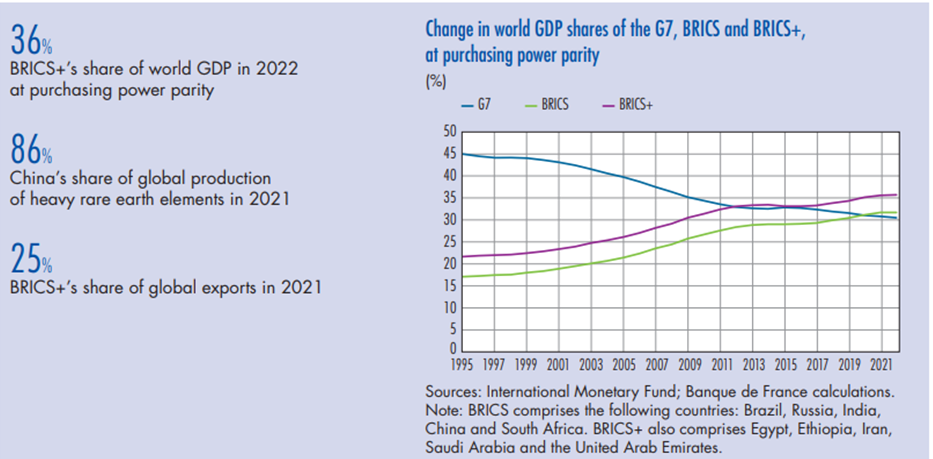
The evaluation of BRICS 2.0[6] focuses on its transformative role in shaping sustainable development, digital innovation, and financial sovereignty for the Global South. This analysis examines how the bloc’s initiatives and institutional mechanisms collectively contribute to an alternative global governance model, challenging Western-dominated structures such as the IMF and World Bank. In terms of sustainable development, BRICS nations have prioritized green innovation and environmental policies, including renewable energy, bio-economy programs, and climate-focused initiatives. Evaluating these efforts involves assessing the effectiveness of green finance, technology adoption, and policy frameworks in reducing carbon emissions and promoting long-term ecological resilience. Digital innovation forms another critical dimension of BRICS 2.0. Member nations, including India, China, and Russia, have implemented extensive digital infrastructure, data governance frameworks, and AI-driven solutions that enhance economic efficiency, technological inclusion, and digital sovereignty. The evaluation considers the impact of these strategies on governance effectiveness, economic growth, and equitable access to technology across the Global South. Financial sovereignty is a further focus, with de-dollarization efforts and the establishment of the New Development Bank (NDB) enabling BRICS countries to reduce dependency on Western-led financial systems. The analysis examines the efficacy of these measures in strengthening economic resilience, promoting multilateral trade, and enhancing fiscal autonomy. By synthesizing comparative, doctrinal, and historical perspectives, this evaluation highlights the synergies, successes, and challenges of BRICS 2.0. It provides insights into how the bloc’s integrated approach to sustainability, digitalization, and financial independence can serve as a model for inclusive and equitable global development in the 21st century.
Current Status of BRICS 2.0: Progress and Challenges in Advancing Sustainable, Digital, and Financial Agendas in the Global South:
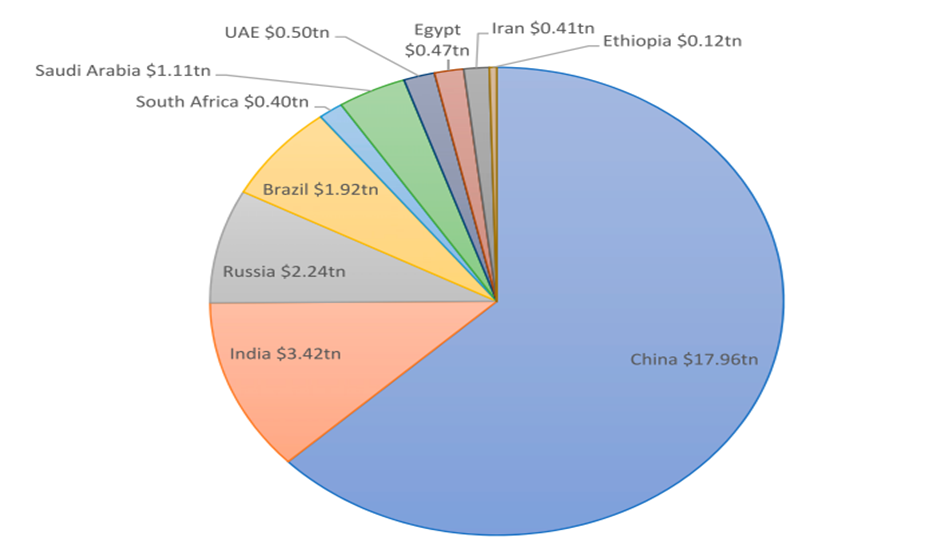
BRICS 2.0 represents a dynamic evolution of the original [7]BRICS coalition, reflecting an intensified focus on sustainability, digital transformation, and financial independence for the Global South. Currently, the bloc has made significant strides in shaping alternative governance and economic frameworks that challenge traditional Western-dominated institutions such as the IMF and World Bank. In sustainable development, BRICS nations have advanced green initiatives, including China’s Green Belt projects, Brazil’s bio-economy programs, India’s renewable energy expansion, Russia’s technological modernization, and South Africa’s emphasis on solar and wind energy. These efforts aim to reduce carbon emissions, promote clean technologies, and foster climate resilience across the bloc, though implementation gaps and uneven progress remain among member countries. Digital innovation is another critical domain where BRICS 2.0[8] has achieved tangible progress. India’s Digital Public Infrastructure, China’s AI and data governance frameworks, and Russia’s technology-driven modernization initiatives exemplify efforts to enhance economic efficiency, technological inclusion, and digital sovereignty. Despite this, disparities in digital readiness and infrastructure among members pose challenges to equitable technology adoption across the bloc. Financial sovereignty is reinforced through mechanisms like the New Development Bank (NDB) and policies promoting de-dollarization, aiming to reduce dependency on Western financial systems and enhance multilateral trade. Nevertheless, global economic volatility, internal fiscal constraints, and geopolitical tensions limit the pace of financial integration. Overall, BRICS 2.0 reflects a mixed trajectory of progress and challenges. While the bloc has successfully created a platform for sustainable, digital, and financially independent development, ongoing coordination, equitable policy implementation, and resilience-building remain central to achieving its transformative vision for the Global South.
Future Prospects of BRICS 2.0: Shaping an Inclusive, Sustainable, and Digitally Empowered Global South:
The future of BRICS 2.0[9] holds immense potential for transforming global governance, economic resilience, and sustainable development in the Global South. Building on its progress in green innovation, digital transformation, and financial independence, the bloc is positioned to become a model for inclusive and multipolar global cooperation. Sustainability is expected to remain a core pillar, with member nations expanding renewable energy initiatives, bio-economy programs, and climate-resilient infrastructure. By leveraging green finance, technology-driven environmental solutions, and multilateral partnerships, BRICS 2.0[10] can accelerate the transition to low-carbon economies while fostering ecological resilience and long-term prosperity. Digital empowerment will be another key dimension, as BRICS nations continue to strengthen digital public infrastructure, data governance frameworks, and AI-driven solutions. Enhanced technological inclusion can bridge digital divides within and across member countries, ensuring equitable access to emerging technologies and fostering innovation-led economic growth. Collaborative efforts in cybersecurity, data sovereignty, and ethical AI deployment can establish BRICS as a global standard-bearer for responsible digital transformation. Financial sovereignty will further define the bloc’s future trajectory. Expansion of the New Development Bank (NDB), promotion of de-dollarization, and development of alternative financial mechanisms can reduce dependency on Western-led systems, bolster multilateral trade, and enhance economic resilience across the Global South. Looking ahead, BRICS 2.0’s success will depend on effective coordination, harmonized policy implementation, and adaptive governance mechanisms. By integrating sustainability, digitalization, and financial independence into a cohesive framework, BRICS 2.0 can emerge as a transformative platform, shaping a future where technology, ecological stewardship, and economic autonomy coexist to empower the Global South in a balanced, equitable, and resilient global order.
CONCLUSION
BRICS 2.0 represents a pivotal evolution in global governance, combining sustainability, digital innovation, and financial sovereignty to empower the Global South. By advancing green technologies, renewable energy, digital infrastructure, and de-dollarization strategies, the bloc challenges Western-dominated economic frameworks while fostering inclusive growth and ecological resilience. Its multidimensional approach promotes equitable access to technology, climate-conscious development, and economic autonomy, offering a viable alternative model for global cooperation. The success of BRICS 2.0 hinges on coordinated policy implementation, institutional innovation, and mutual collaboration, positioning it as a transformative force capable of shaping a balanced, resilient, and sustainable global future.
BIBLIOGRAPHY
- Geoscience Frontiers Volume 15, Issue 2, March 2024, 10174, Research Paper Resources, innovation, globalization, and green growth: The BRICS financial development strategy.
- Muhammad Zubair Chishti1 School of Business, Zhengzhou University, Henan, China. School of Economics, Quaid I Azam University, Islamabad, Pakistan [email protected] Avik Sinha Centre for Excellence in Sustainable Development, Goa Institute of Management, India. Email: [email protected]
- School of Economics, University of Cape Town, Cape Town, South Africa 2 Department of Social Sciences, Technology and Arts, Luleå University of Technology, Luleå, Sweden Correspondence Maxwell Chukwudi Udeagha, School of Economics, University of Cape Town, Rondebosch, Cape Town, South Africa. Email: [email protected] ; [email protected]
- Usman Ullah1 · Wasim Abbas Shaheen1 Received: 15 September 2023 / Accepted: 30 September 2024 © The Author(s), under exclusive licence to Springer Nature B.V. 2024, Environment, Development and Sustainability https://doi.org/10.1007/s10668-024-05480-x
- Prabhakar , A. (2024). A Sustainable and Inclusive Economic Development: A Global Imperative: A Global Imperative. Journal of Recycling Economy & Sustainability Policy, 4(1), 1–16. Retrieved from https://respjournal.com/index.php/pub/article/view/36
- Amandine Afota, Valentin Burban, Pavel Diev, Fabio Grieco, Théo Iberrakene, Karine Ishii, Margarita Lopez Forero, Quentin Paul, Frank Sammeth, Cécile Valadier European and Multilateral Policies Directorate JEL codes F02, F21, G15
- Local Economy 2023, Vol. 38(8) 727–734 © The Author(s) 2024 Article reuse guidelines: sagepub.com/journals-permissions DOI: 10.1177/02690942241270551 journals.sagepub.com/home/lec
- The BRICS Countries’ Bilateral Economic Relations, 2009 to 2019: Between Rhetoric and Reality Bas Hooijmaaijers https://orcid.org/0000-0002-1701-6290 [email protected] all authors and affiliations All Articles https://doi.org/10.1177/21582440211054128
- The Digital Economy of BRICS: Prospects for Multilateral Cooperation A. Ignatov Alexander Ignatov – Researcher, Centre for International Institutions Research, Russian Presidential Academy of National Economy and Public Administration; 11 Prechistenskaya naberezhnaya, Moscow, 119034, Russian Federation; E-mail: [email protected]
- Published in: 2011 International Conference on Machine Learning and Cybernetics, Date of Conference: 10-13 July 2011. Date Added to IEEE Xplore: 12 September 2011. ISSN Information, DOI: 10.1109/ICMLC.2011.6016923. Publisher: IEEE, Conference Location: Guilin, China
[1] Geoscience Frontiers Volume 15, Issue 2, March 2024, 10174, Research Paper Resources, innovation, globalization, and green growth: The BRICS financial development strategy.
[2] Muhammad Zubair Chishti1 School of Business, Zhengzhou University, Henan, China. School of Economics, Quaid I Azam University, Islamabad, Pakistan [email protected] Avik Sinha Centre for Excellence in Sustainable Development, Goa Institute of Management, India. Email: [email protected]
[3] School of Economics, University of Cape Town, Cape Town, South Africa 2 Department of Social Sciences, Technology and Arts, Luleå University of Technology, Luleå, Sweden Correspondence Maxwell Chukwudi Udeagha, School of Economics, University of Cape Town, Rondebosch, Cape Town, South Africa. Email: [email protected] ; [email protected]
[4] Usman Ullah1 · Wasim Abbas Shaheen1 Received: 15 September 2023 / Accepted: 30 September 2024 © The Author(s), under exclusive licence to Springer Nature B.V. 2024, Environment, Development and Sustainability https://doi.org/10.1007/s10668-024-05480-x
[5] Prabhakar , A. (2024). A Sustainable and Inclusive Economic Development: A Global Imperative: A Global Imperative. Journal of Recycling Economy & Sustainability Policy, 4(1), 1–16. Retrieved from https://respjournal.com/index.php/pub/article/view/36
[6] Amandine Afota, Valentin Burban, Pavel Diev, Fabio Grieco, Théo Iberrakene, Karine Ishii, Margarita Lopez Forero, Quentin Paul, Frank Sammeth, Cécile Valadier European and Multilateral Policies Directorate JEL codes F02, F21, G15
[7] Local Economy 2023, Vol. 38(8) 727–734 © The Author(s) 2024 Article reuse guidelines: sagepub.com/journals-permissions DOI: 10.1177/02690942241270551 journals.sagepub.com/home/lec
[8] The BRICS Countries’ Bilateral Economic Relations, 2009 to 2019: Between Rhetoric and Reality Bas Hooijmaaijers https://orcid.org/0000-0002-1701-6290 [email protected] all authors and affiliationsAll Articleshttps://doi.org/10.1177/21582440211054128
[9] The Digital Economy of BRICS: Prospects for Multilateral Cooperation A. Ignatov Alexander Ignatov – Researcher, Centre for International Institutions Research, Russian Presidential Academy of National Economy and Public Administration; 11 Prechistenskaya naberezhnaya, Moscow, 119034, Russian Federation; E-mail: [email protected]
[10] Published in: 2011 International Conference on Machine Learning and Cybernetics, Date of Conference: 10-13 July 2011. Date Added to IEEE Xplore: 12 September 2011. ISSN Information, DOI: 10.1109/ICMLC.2011.6016923. Publisher: IEEE, Conference Location: Guilin, China